




The 4Cs of diamonds explained, plus three more worth knowing
The short answer: the 4Cs are cut, colour, clarity and carat. They are the four qualities every diamond is graded on, and together they set its price. Cut matters most, because cut is what makes a diamond sparkle. Three more Cs help you buy well: certificate, contour (the shape) and cost.
This guide takes each one in turn and tells you which grades are worth paying for.
The 4Cs at a glance
| The C | What it measures | The scale | A sensible choice for an engagement ring |
|---|---|---|---|
| Cut | How well the stone handles light | Excellent, Very Good, Good, Fair, Poor | Excellent |
| Colour | How colourless the stone is | D (colourless) to Z (light yellow) | F to H in white metal, up to J in yellow gold |
| Clarity | How free it is from natural marks | FL, IF, VVS1, VVS2, VS1, VS2, SI1, SI2, I1 to I3 | VS2 or SI1, as long as it is clean to the eye |
| Carat | Weight | 1 carat = 0.2 grams | Whatever the budget allows once cut is right |
1. Cut: what is diamond cut and why does it matter most?
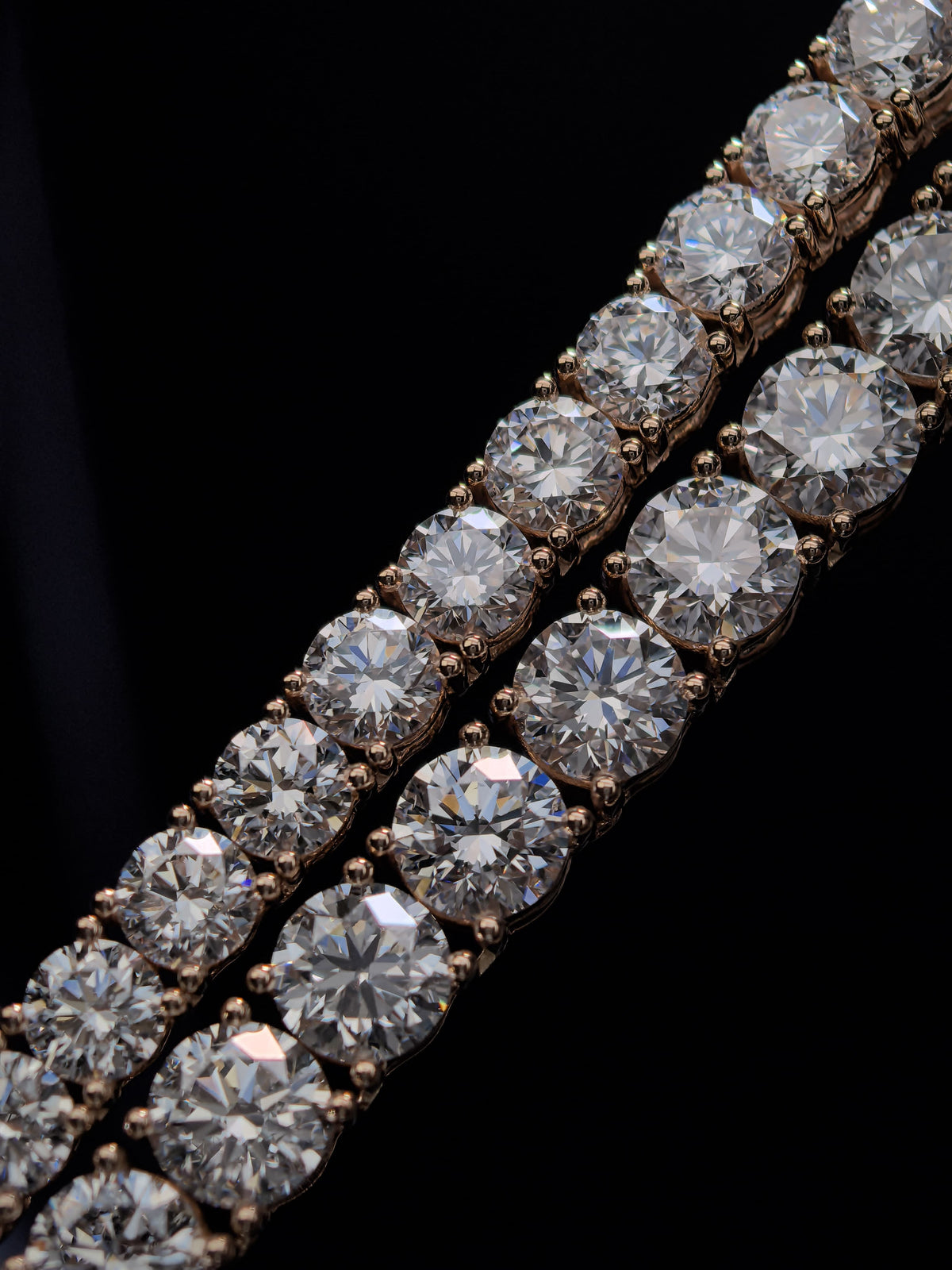
Cut is how well the diamond has been proportioned and polished. It is not the shape. A well cut diamond takes light in through the top, bounces it around inside and sends it back to your eye. A poorly cut one lets the light leak out of the bottom or the side and looks dull, whatever its colour or clarity.

Round brilliant diamonds get a cut grade on the certificate, from Excellent down to Poor. Choose Excellent. The price gap to Very Good is small and the difference on the hand is not.
Other shapes, such as oval, pear and emerald, usually carry no overall cut grade. Look at the polish and symmetry grades instead, and look at the stone itself. This is where a jeweller earns their keep.
Jeweller's tip: if the budget is tight, drop a colour or clarity grade before you drop the cut.
2. Colour: what colour grade should a diamond be?
Colour is graded from D to Z. D is completely colourless. As you move down the alphabet the stone picks up a faint yellow or brown tint.

- D, E, F are colourless. The rarest and the dearest.
- G, H, I, J are near colourless. Most people cannot see the tint once the stone is set.
- K and below show a warmth you can see.
The metal changes what you need. In platinum or white gold, F to H looks white. In yellow or rose gold the metal lends its own warmth to the stone, so an I or J can look just as good and cost a good deal less.
Jeweller's tip: colour is judged from the side in a laboratory. On the hand you look at a diamond from the top, where tint is hardest to see.
3. Clarity: what do VS1, VS2 and SI1 mean?
Almost every diamond has tiny marks inside it called inclusions. Clarity grades how many there are and how easy they are to see under ten times magnification.

- FL and IF: flawless or internally flawless.
- VVS1 and VVS2: very, very slightly included. Hard for a trained grader to find.
- VS1 and VS2: very slightly included. Not visible without magnification.
- SI1 and SI2: slightly included. Sometimes visible to the eye, often not.
- I1, I2, I3: included. Marks you can see, and they can affect sparkle.
The phrase to remember is eye-clean. If you cannot see a mark with your own eyes, paying for a higher grade buys you a better certificate and nothing you can see. For most shapes VS2 or a good SI1 is the sweet spot.
Jeweller's tip: emerald and Asscher cuts have large open facets that work like a window. Marks show more easily, so go for VS1 or better in those shapes.
4. Carat: is carat the size of a diamond?
Carat is weight, not size. One carat is 0.2 grams. A well cut one carat round diamond measures about 6.4 to 6.5mm across.

Two things are worth knowing.
- Prices jump at round numbers. A 1.00 carat stone costs noticeably more than a 0.90. Side by side you would struggle to tell them apart.
- Two stones of the same weight can look different sizes. A deep stone hides its weight underneath where nobody sees it. Check the measurements in millimetres, not just the carat weight.
5. Certificate: does a diamond need a certificate?
Yes. A certificate is an independent report on the stone from a grading laboratory. The two you will see most often are GIA and IGI. It confirms the 4Cs, the measurements, and whether the diamond is natural or lab-grown.
Most certified diamonds also have the report number laser-inscribed on the edge of the stone. It is too small to see by eye, but a jeweller can show it to you under a loupe. That number ties the stone in your ring to the paper in your hand.
Without a certificate you are relying on the seller's opinion of their own stock.
6. Contour: which diamond shape should I choose?
Contour is the shape of the diamond seen from above. Round is the classic and has the most sparkle. It is also the most expensive per carat, because more of the rough diamond is lost in cutting it.

Oval, pear and marquise are longer, so they cover more of the finger and look larger for their weight. Emerald and Asscher cuts trade sparkle for long, calm flashes of light. Cushion and radiant sit between the two.
Jeweller's tip: ovals, pears and marquises can show a dark band across the middle called a bow-tie. Every one has it to some degree. A good stone keeps it faint. It does not appear on the certificate, so the stone has to be looked at.
7. Cost: where should the money go?
The 4Cs pull against each other. Push one up and, on a fixed budget, another has to come down. This order works for most people.
- Cut first. Do not compromise here.
- Then carat, to the size you actually want. Look just under the round numbers.
- Colour to suit the metal. There is no need for D in yellow gold.
- Clarity to eye-clean and no higher.
Whether the diamond is natural or lab-grown changes the budget more than any single grade. We cover that in lab-grown vs natural diamonds. For help setting a figure, see how much to spend on an engagement ring.
Common questions
Which of the 4Cs is most important?
Cut. It decides how much the diamond sparkles. A well cut stone with modest colour and clarity will look better than a poorly cut stone with top grades.
What are the 7Cs of diamonds?
The original four are cut, colour, clarity and carat. The other three vary depending on who you ask. We use certificate, contour (shape) and cost, because those are the three that change what you end up buying.
What is the best colour and clarity for an engagement ring?
For most rings, G or H colour and VS2 or SI1 clarity, provided the stone is eye-clean. In yellow gold you can drop to I or J colour. In an emerald or Asscher cut, go up to VS1 clarity.
Is a 1 carat diamond big?
A one carat round diamond is about 6.4 to 6.5mm across. On most hands that is a clear, noticeable stone. An oval or pear of the same weight will look larger because it is longer.
Do the 4Cs apply to lab-grown diamonds?
Yes. A lab-grown diamond is a diamond, so cut, colour, clarity and carat apply in exactly the same way. IGI grades lab-grown stones on the same scale as natural ones.
See the grades for yourself
Every diamond in our diamond search lists its cut, colour, clarity, carat and certificate, and you can filter by each one. When you have a stone in mind, choose a setting in the ring studio.
Before you pick the setting, read why your engagement ring should be designed with the wedding ring in mind. It is the step most people miss.
If you would rather talk it through, call +44 7898 659493 or visit us at 81 to 83 Spencer Street in Birmingham's Jewellery Quarter, Monday to Saturday, 9am to 6pm.